


What Happens If You Don't Get Your Teeth Scaled? (You Won't Believe the Results!) - Updated Blog 2026
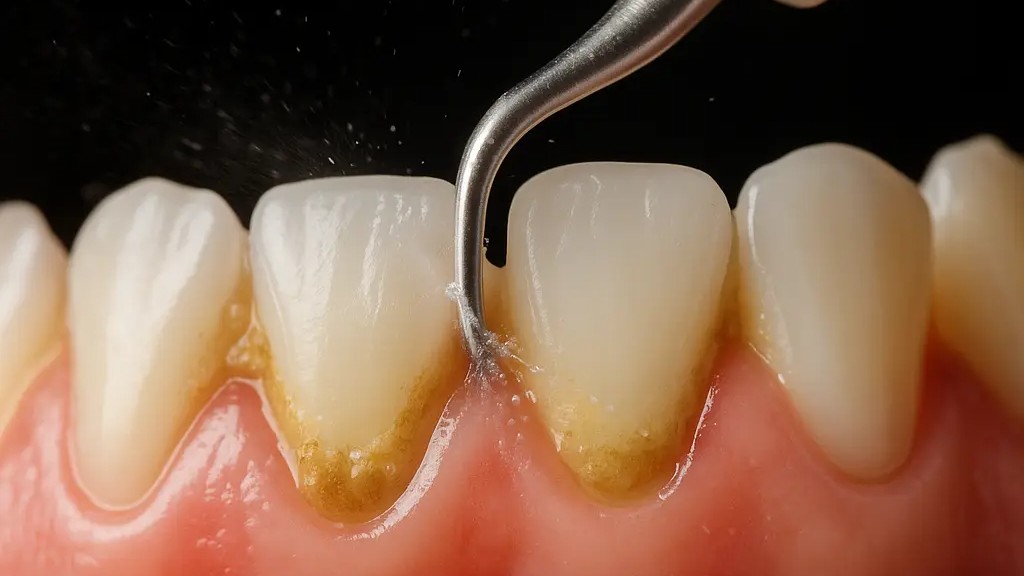
07 August 2026 Health Guide Mustafa PAYASYou might be brushing your teeth twice or three times a day, using the most expensive toothpastes, and never missing mouthwash in your bathroom. But despite this flawless routine, are you aware of that hard, yellowish, calcified layer silently growing on the back surfaces of your teeth, especially on the tongue-facing parts of your lower front teeth?
At our PYS Dent clinic serving in the Kocasinan, Kayseri region, the most common pitfall our patients fall into is ignoring this sneaky problem for years simply because it doesn't cause pain. The thought of "I brush regularly anyway" or "It's just a small stain, it won't hurt" unfortunately opens the door to irreversible and highly damaging consequences for your oral health.
What happens to you if you postpone the dental scaling (tartar removal) procedure, which dentists constantly emphasize during routine check-ups, for months or even years? Let's take a closer look at the shocking results that will unfold not only in your mouth but throughout your entire body.
5 Major Dangers of Uncleaned Tartar
1. The Hidden Nightmare of Your Social Life: Chronic Bad Breath (Halitosis)
Dental calculus is not smooth; on the contrary, it has a highly porous structure where millions of bacteria safely hide and multiply. No matter how hard you brush your teeth, the bristles can never penetrate this concrete-like layer. The sulfur gases produced by the bacteria trapped inside can only be temporarily masked with minty gums, chewing cloves, or store-bought mouthwashes. As long as the tartar remains there, it is impossible to get rid of that chronic and disturbing bad breath.
2. Bloody Sinks: Gum Inflammation (Gingivitis)
Healthy gums are light pink in color, firm, and have a stippled, orange-peel appearance. However, uncleaned tartar creates a physical and bacterial barrier at the gum line, constantly irritating the tissue. Over time, your gums will start to turn red, swell, and bleed with even the slightest brushing stroke. If you see blood when biting into an apple or brushing your teeth in the morning, gingivitis, the first stage of gum disease, has already knocked on your door.
3. The Foundation of Your Smile is Shaking: Gum Recession and Sensitivity
Inflamed, swollen, and diseased gums begin to shrink and recede towards the root tip, almost as if running away from the tartar. When gum recession begins, the sensitive root surfaces—which are normally protected inside the bone and lack an enamel layer—become exposed. As a result, you are left alone with that sharp, unbearable pain that pierces your brain when you drink hot tea, sip cold water, or eat ice cream.
4. The Silent Danger Melting the Jaw: Bone Loss (Periodontitis)
If dental scaling is not performed for a long time, the infection does not stay limited to the soft tissue. The inflammation advances into the periodontal ligaments that attach the teeth to the jawbone, and eventually into the jawbone itself. To escape the chronic infection and protect itself, the jawbone starts to melt away its own solid structure supporting the tooth. This stage, known in dentistry as periodontitis, is the red alert point where irreversible structural destruction begins in the mouth.
5. The Point of No Return: Loss of Perfectly Healthy Teeth
Get ready to face the most dramatic outcome: You could completely lose your perfectly healthy, pearly white teeth that don't have a single cavity on them! Teeth that lose their bone support will eventually start to wobble, just like a building with an excavated, hollowed-out foundation. When the jawbone melts to the point where it can no longer hold the tooth, that healthy tooth has no other fate than to be extracted or fall out on its own while eating. Moreover, this situation makes even implant treatments difficult, because there won't be enough bone volume left to place the implant.
❌ Common Misconceptions (Don't Believe the Urban Legends!)
Hearsay information about oral and dental health often misleads our patients and makes them afraid of treatment. Here are the myths we hear most often in the clinic and the scientific facts behind them:
-
False: "Dental scaling scratches the tooth enamel, thins the tooth, and damages it." True: Absolutely not! This procedure is performed by our dentists using special ultrasonic (vibrating) devices. These devices do not cut or scratch the enamel; they only remove the harmful calcified attachments (tartar) stuck to the tooth by breaking them with vibration. It does absolutely no harm to the tooth enamel.
-
False: "If I get it cleaned once, I will always have to get it cleaned, and tartar will form faster than before." True: In the final stage of the professional cleaning process, the tooth surface is polished with special brushes and pastes (polishing). On a tooth with a smoothed surface, as long as regular brushing is done, tartar formation does not accelerate; on the contrary, it becomes much harder for plaque to stick to the tooth.
-
False: "I can clean my tartar myself at home with baking soda, lemon, or vinegar." True: These substances are highly abrasive and acidic. Not only do they fail to clean the tartar, but they also irreversibly scratch and dissolve the tooth enamel. These home remedies lead to permanent yellowing of your teeth and extreme sensitivity. Tartar can only be cleaned by a dentist in a clinical setting.
-
False: "If I get a dental scaling, my teeth will become as white as a Hollywood star's." True: The scaling (cleaning) procedure restores your teeth to their own natural, clean color by removing tea, coffee, cigarette stains, and tartar. However, if the natural color of your tooth is already yellowish, or if extra whiteness is desired, a chemical procedure called "teeth whitening (bleaching)" must be applied separately after the cleaning.
❓ Frequently Asked Questions (FAQ)
How Long Does Dental Scaling Take?
Although the procedure time varies depending on the density of tartar in the mouth and the condition of the gums, it generally takes an average of 20 to 30 minutes. In cases with heavy tartar buildup, the procedure may need to be divided into two sessions.
Does Dental Scaling Hurt? Will I Get a Needle?
No, local anesthesia (a needle) is generally not required for a routine dental scaling. Our patients only experience a slight vibration and a tickling sensation. It is a highly comfortable procedure that allows you to return to your daily life immediately. Regional numbing may only be applied to ensure comfort in patients with very advanced gum inflammation and deep pockets.
How Much is the Dental Scaling Price 2026? What is the Average Price?
While researching on the internet, you might come across many an updated blog and expect an average price for your treatment. However, the most crucial point you need to know regarding price 2026 research—which directly concerns your health—is this: Standard package pricing is not accurate in healthcare.
Every patient's tartar density, gum pocket depth, missing teeth in the upper and lower jaws, and the scope of the treatment to be applied are completely different. While a 15-minute superficial cleaning might be sufficient for one patient, subgingival curettage (deep cleaning) may be required for another. For this reason, the fixed numbers you see on internet forums or comments are completely misleading.
All our physicians at PYS Dent in Kayseri first thoroughly analyze your oral condition and the health of your gums in a clinical setting. To learn your completely personalized treatment plan and the most accurate price information with no binding obligations, you can immediately book an appointment at our clinic and get checked by our expert staff. Don't entrust your smile and your budget to hearsay!

0 Yorum
Yorum Yaz